Sunday, October 4, 2015

Last Words of al-Sadiq (as)

Let us see the last words of Imam Ja'far Ibn Muhammad al-Sadiq narrated from Sheikh Bashir al-Mazandarani in his great work Musnad Abi Basir (where he collected most of the narration of Abi Basir the Sahabi of Imam al-Sadiq).

Bashir al-Muhammadi al-Mazandarani :


Chapter on the history of Imam Ja'far al-Sadiq peace be upon him.

Thawab al-A'mal: Muhammad Ibn Ali Majiluyai, from his uncle, from Muhammad Ibn Ali al-Qurayshi, from Ibn al-Fadhal, from al-Maythami, from Abi Basir who said: I entered on Umm Hamida giving her my condolences on Abi Abdallah (as) so she cried and I cried because of her crying, then she said: "O Aba Muhammad, if you had seen Aba Abdallah at [the time] of Death, you would have been surprised, he opened his eye and he [Abi Abdallah] said: "Gather all those that I or they have closeness to me, she [Umm Hamida] said: We did not leave anyone that we did not gather [with us], he said: He [Abi Abdallah] looked at them and said: "Our intercession will not avail one who takes his prayer lightly [i.e neglect them]."."

تاريخ الإمام جعفر الصادق عليه السلام

ثواب الأعمال : حدَّثنيمحمّد بن علي ماجيلويه ، عن عمّه ، عن محمّد بن علي القريشي ، عن ابن فضّال ، عن الميثمي ، عن أبي بصير قال : دخلت على اُمّ حميدة اُعزيها بأبي عبداللّه عليه السلام ، فبكت وبكيتُ لبكائها ثم قالت : يا أبا محمّد ، لو رأيت أبا عبداللّه عليه السلامعند الموت لرأيت عجبا ! فتح عينه ثم قال : اجمعوا لي كل من بيني وبينه قرابة ، قالت : فلم نترك أحدا إلاّ جمعناه ، قال : فنظر إليهم ثم قال : إنّ شفاعتنا لا تنال مستخفّا بالصلاة . [1]

- Musnad Abi Basir of Bashir al-Muhammadi al-Mazandarani, Volume 1, Page 427

Thursday, October 1, 2015

Praying behind non-Shia?

In this article we shall see what the Aimah (as) said regarding praying behind non-Shias from Allamah al-Hurr al-Amili (rah) in his great and blessed work Wasail al-Shia, I did not translate the Ahadith that point the fact that prayer behind our enemies is only allowed for Taqiyyah [i.e dissimulation, fear of death etc] and that we have to pray as if we were alone, for ourselves (as if there was no Imam) and that otherwise prayer behind them is not allowed.

Allamah al-Hurr al-Amili:


Chapter on the ruling that the Imam of Jama'ah has to be Mumin, Muwali (i.e follower) to the Aimah
باب اشتراط كون امام الجماعة مؤمناً موالياً للائمّة ، وعدم جواز الاقتداء بالمخالف في الاعتقادات الصحيحة الأصوليّة إلاّ لتقيّة

1. Muhammad Ibn Ya'qub, from Muhammad Ibn Yahyah, from Ahmad Ibn Ahmad, from Abdallah Ibn Muhammad al-Hajal, from Tha'labah, from Zurarah who said: I asked Aba Ja'far (as) about prayer behind the opponents [i.e. Sunnis] So he said: They not to me but of the status of a wall.
Sheikh al-Tusi narrate [the same] with his chain from Ahmad Ibn Muhammad, the same.
١ ـ محمّد بن يعقوب ، عن محمّد بن يحيى ، عن أحمد بن محمّد ، عن عبدالله بن محمّد الحجّال ، عن ثعلبة ، عن زرارة قال : سألت أبا جعفر ( عليه السلام ) عن الصلاة خلف المخالفين ؟ فقال : ما هم عندي إلاّ بمنزلة الجدر.
ورواه الشيخ بإسناده عن أحمد بن محمّد ، مثله (١).
- Wasail al-Shia of Allamah al-Hurr al-Amili, Volume 8, Page 309

2. From Ali Ibn Muhammad, from Sahl Ibn Ziyad, from Ali Ibn Mahziyar, from Abi Ali Ibn Rashd who said: I said to Abi Ja'far (as) your followers have differed do I pray behind all of them? He said: Do not pray except behind the one who you trust his religion.
Muhammad Ibn al-Hassan with his chain from Sahl Ibn Ziyad, the same except that he add: and his faith.
٢ ـ وعن علي بن محمّد ، عن سهل بن زياد ، عن علي بن مهزيار ، عن أبي علي بن راشد قال : قلت لأبي جعفر ( عليه السلام ) : إنّ مواليك قد اختلفوا ، فأُصلّي خلفهم جميعاً ؟ فقال : لا تصلّ إلاّ خلف من تثق بدينه.
محمّد بن الحسن بإسناده عن سهل بن زياد ، مثله ، إلاّ أنّه زاد : وأمانته (١).
- Wasail al-Shia of Allamah al-Hurr al-Amili, Volume 8, Page 309

3. And with his Isnad from al-Hussein Ibn Sa'id, from al-Nadar, from Yahyah al-Hilabi, from Ibn Maskan, from Isma'il al-Ju'fi who said: "I said to Abi Ja'far (as): [There is] a man who loves Amir al-Mumineen (as) but does not dissociate from his enemies, and he says: He is more beloved to me from those who opposed him. So he said: This is a mixed [confused person] and he is an enemy, so do not pray behind him, and he has no honor, except if you do Taqiyyah [on him]."
 ٣ ـ وبإسناده عن الحسين بن سعيد ، عن النضر ، عن يحيى الحلبي ، عن ابن مسكان ، عن إسماعيل الجعفي قال : قلت لأبي جعفر ( عليه السلام ) : رجل يحب أمير المؤمنين ( عليه السلام ) ولا يتبرّأ من عدوّه ويقول : هو أحبّ إليّ ممن خالفه ، فقال : هذا مخلط وهو عدوّ ، فلا تصلّ خلفه ولا كرامة إلاّ أن تتّقيه.
- Wasail al-Shia of Allamah al-Hurr al-Amili, Volume 8, Page 309


5. And with his Isnad from Ahmad Ibn Muhammad Ibn Issah, from Abi Abdallah al-Barqi who said: I wrote to Abi Ja'far al-Thani (as) : "Is is allowed to pray behind the one who stopped at your father and your grandfather (as) [Regarding Imamat] ? So he answered: Do not pray behind him."
And al-Saduq has narrated with his Isnad from Abi Abdallah al-Barqi: the same.
٥ ـ وبإسناده عن أحمد بن محمّد بن عيسى ، عن أبي عبدالله البرقي ، أنّه قال : كتبت إلى أبي جعفر الثاني ( عليه السلام ) : أيجوز الصلاة خلف من وقف على أبيك وجدّك ( صلوات الله عليهما ) ؟ فأجاب : لا تصلّ وراءه.
ورواه الصدوق بإسناده عن أبي عبدالله البرقي ، مثله (١).
- Wasail al-Shia of Allamah al-Hurr al-Amili, Volume 8, Page 310


7. Muhammad Ibn Ali with his Isnad from Muhammad Ibn Ali al-Hilabi from Abi Abdallah (as) who said: "Do not pray behind the one who attest on you on Kufr [i.e that you're Kaffir] and not behind the one who you attested on his Kufr [i.e that he is Kaffir]."
٧ ـ محمّد بن علي بن الحسين بإسناده ، عن محمّد بن علي الحلبي ، عن أبي عبدالله ( عليه السلام ) ، أنّه قال : لا تصلّ خلف من يشهد عليك بالكفر ، ولا خلف من شهدت عليه بالكفر.
- Wasail al-Shia of Allamah al-Hurr al-Amili, Volume 8, Page 311

9. He said: Ali Ibn Muhammad (as) and Muhammad Ibn Ali (as) have said: "Whoever say in Tajsim [Anthropomorphism i.e that Allah has a Body etc], do not give him anything from the Zakat and do not pray behind him.
And the Sheikh has also narrated that in a Mursal, same [meaning].
٩ ـ قال : وقال علي بن محمّد ومحمّد بن علي ( عليهما السلام ) : من قال بالجسم فلا تعطوه شيئاً من الزكاة ولا تصلّوا خلفه.
ورواه الشيخ أيضاً مرسلاً ، نحوه (١).
- Wasail al-Shia of Allamah al-Hurr al-Amili, Volume 8, Page 311-312


10.  And in al-Amali : from Muhammad Ibn al-Hassan, from al-Saffar, from al-Abbas Ibn Ma'ruf from Ali Ibn Mahziyar who said: I wrote to Muhammad Ibn Ali al-Redha (as) : "Do I pray behind the one who say in Jism [Anthropomorphism i.e that Allah has a Body etc] and who say the saying of Yunus? So he answered (as): Do not pray behind them, and do not give them from the Zakat and dissociate yourselves from them, Allah is innocent from them."
١٠ ـ وفي ( الأمالي ) : عن محمّد بن الحسن ، عن الصفّار ، عن العبّاس بن معروف عن علي بن مهزيار قال : كتبت إلى محمّد بن علي الرضا ( عليه السلام ) : أُصلّي خلف من يقول بالجسم ، ومن يقول بقول يونس ؟ فكتب ( عليه السلام ) : لا تصلّوا خلفهم ، ولا تعطوهم من الزكاة ، وابرؤا منهم برأ الله منهم.
- Wasail al-Shia of Allamah al-Hurr al-Amili, Volume 8, Page 312

Monday, December 1, 2014

They cursed those who fought Amir al-Mumineen (as)

In this article we shall see the companions of al-Redha (as) cursing those who fought Amir al-Mumineen (as), and al-Redha (as) did not only accept this but was pleased with this action, we shall begin with the Ahadith.

Sheikh al-Saduq:


35 - Narrated to us from Muhammad Ibn Yahya al-Sowlif from Oan Ibn Muhammad from Sahl Ibn al-Qasim who said al-Redha (as) heard one of his companions say: "May Allah curse those who fought Amir al-Mumineen (as)." Then al-Redha (as) told him, "Say: except for those who have repented and improved themselves." al-Redha (s) then added, "The sin of those who disobeyed him (i.e. Amir al-Mumineen) and did not accompany him to fight corruption and the corrupt ones is even greater than that of those who fought him and then repented. And God made them succeed in repenting."
35 - حدثنا محمد بن يحيى الصولي، قال: حدثنا عون بن محمد قال:
حدثنا سهل بن القاسم قال: سمع الرضا عليه السلام عن بعض أصحابه يقول: لعن الله من حارب أمير المؤمنين عليه السلام فقال له: قل إلا من تاب وأصلح ثم قال: ذنب من تخلف عنه ولم يبت أعظم من ذنب من قاتله ثم تاب.
- Uyoon Akhbar al-Redha, Vol.2, Page 94


Allamah Baqir al-Majlissi:


[Chapter Eight] Chapter on the one who fought Ali Amir al-Mumineen (as)

289 - Uyoon Akhbar al-Redha (as) : al-Hussein Ibn Ahmad al-Bayhaqi from Muhammad Ibn Yahya al-Sowli from Oan Ibn Muhammad from Sahl Ibn al-Qasim who said al-Redha (as) heard one of his companions say: "May Allah curse those who fought Amir al-Mumineen (as)." Then al-Redha (as) told him, "Say: except for those who have repented and improved themselves." al-Redha (s) then added, "The sin of those who disobeyed him (i.e. Amir al-Mumineen) and did not accompany him to fight corruption and the corrupt ones is even greater than that of those who fought him and then repented. And God made them succeed in repenting."
[الباب الثامن] باب حكم من حارب عليا أمير المؤمنين صلوات الله عليه 289 - عيون أخبار الرضا (ع): الحسين بن أحمد البيهقي عن محمد بن يحيى الصولي عن عون بن محمد عن سهل بن القاسم قال: سمع الرضا (عليه السلام) بعض أصحابه يقول: لعن الله من حارب أمير المؤمنين (عليه السلام) فقال له: قل إلا من تاب وأصلح. ثم قال له: ذنب من تخلف عنه ولم يتب أعظم من ذنب من قاتله ثم تاب.
- Bihar al-Anwar, Vol.31-32, Page 417

With those two narration in head we can conclude that Aimah (as) agreed on those words as they didn't refuse them or attack them which is commonly called Taqrir, the Aimah (as) were pleased of such act so we can do the same.

Sayyed Muhammad Baqir al-Sadr:


Indication of Taqrir: *
The silence of an infallible on a position concerning him prove his acceptance. 
دلالات التقرير:
سكوت المعصوم عن موقف يواجهه يدل على امضائه،
- Duroos Fi 'Ilm al-Usool, Vol.2, Page 113


Conclusion: al-Redha (as) did not deny this curse regarding the people who fought Amir al-Mumineen (like Aisha, Mu'awiyah etc) but he rather explained, gave his opinion regarding his companions that if one did Tawbah (i.e repentance) Allah will accepted it. Him not denying this issue and having a silence on it show his acceptance.

* See comment section for more details.

Monday, November 24, 2014

Sayed Ali Behbahani: For your good deeds to be accepted you need Aimah!

In this article we will present the view of one of our greatest contemporary scholars, the view of Ayyatollah Sayyed Ali al-Musawi Behbahani (d. 1395H) on the need of recognizing Aimah (as) for your action to be accepted, because as we can see in our present day people only deceive others by lying them on this unity and so on.

First of all let us see who was Sayed Ali Behbahani.

In Sayed Sistani Official Website:


[...] And during his time of living in Qom, the late Allamah Sayed Ali Behbahani (a famous scholar from Ahwaz and one of the followers of the school of Sheikh Hadi Tehrani) exchanged letters and the subject of the letters were the rulings of Qibla as His Eminence the Sayed (may God protect him) debated some ideas of the Muhaqqiq Tehrani and Sayed al Behbahani was in the position of defense of these ideas.
وخلال فترة اقامته في قم راسل العلامة المرحوم السيد علي البهبهاني (عالم الاهواز الشهير ومن اتباع مدرسة المحقق الشيخ هادي الطهراني) وكان موضوع المراسلات بعض مسائل القبلة حيث ناقش سماحة السيد (دام ظله) بعض نظريات المحقق الطهراني ووقف السيد البهبهاني موقف المدافع عنها
- al-Sirah al-Dhatiyah (i.e biography) of Sayed Ali al-Sistani


In the book of Sayed Ali Behbahani, Misbah al-Hydaya fi Ithbat al-Wilayah we can have a summarized of his life, students etc. We can even see that he was the teacher of the son of the great Sayed Ni'matullah al-Jazaeri (rah).

It is said in the preface of his book by Redha al-Istadi:


From his student: [...] 7- Sayed Muhammad Ibn Sayed Ni'matulah al-Jazaeri - peace be upon him - the author of the book with weight [in science] Nabghat Faqih wa Hadith in the biography of his great grandfather Sayed al-Jazaeri author of al-Anwar al-Nu'maniyah.
تلامذته:
 السيد محمد بن السيد نعمة الله الجزائري - سلمه الله - مؤلف الكتاب القيم " نابغة فقه وحديث " في ترجمة جده الأمجد السيد الجزائري صاحب الأنوار النعمانية.
- Muqadimat (i.e Preface) of Misbah al-Hydaya fi Ithbat al-Wilayah, Page 12.


He also protected Sayed Khomeini, and helped to the establishment of his state, as we will see.

And in the Hawza in Qom he was subject to the care of the great Marja' especially Imam Khomeini (rah) - and the Sayed (rah) has a favour in the protection of Imam Khomeini (rah) and in his Islamic uprising. The history books of the uprising have written it so consult them. (Esnad Enghelab e Eslami P. 28 - 107 - 126 - 156)
وفي الحوزة العلمية بقم كان مورد عناية المراجع العظام وبالأخص الإمام الخميني - رضوان الله تعالى عليه - وللسيد " ره " يد بيضاء في حمايته عن الإمام الخميني - رحمة الله عليه ورضوانه - ونهضته. قد دونتها تاريخ النهضة الإسلامية فراجع. (كتاب اسناد انقلاب اسلامى ص 28 و 107 و 126 و 156)
- Muqadimat (i.e Preface) of Misbah al-Hydaya fi Ithbat al-Wilayah, Page 19.


Now let us see what he said regarding the deeds of whoever does not have Aimah (as) like the opponent (i.e Sonnis).

Sayed Ali Behbahani:


"And the pious action is the Wilayah of Ahlul-Bayt (as) on the Tawatur (Multitude) of Narration of both sect [i.e Sunnis and Shias]. To the point that the Faith is not completed and the pious action (i.e A'mal) are not accepted except by the Wilayah of Amir al-Mumineen and the Infallible Aimah from his lineage (as) and knowing Allah is not complete until you know their (Aimah) Wilayah. And even if the man stay all night awake [for pious action] and fasted the day, and gave in charity all he have and done Hajj with every Dirham (he have) and he does not know [Wilayat] the Vicerent of God (i.e Waliyulah) and does not follow him and his action to him then he has nothing of the truth on his action, and he is not from the People of Faith (i.e Ahl al-Iman)."
والعمل الصالح إنما هو ولاية أهل البيت عليهم السلام، على ما تواترت فيه روايات الفريقين.
من أنه لا يكمل الإيمان، ولا يقبل عمل صالح إلا بولاية مولانا أمير المؤمنين، والأئمة المعصومين من ذريته سلام الله عليهم أجمعين. (1) وإن معرفة الله لا تتم إلا بمعرفتهم وولايتهم. (2) ولو أن رجلا قام ليله، وصام نهاره، وتصدق بجميع ماله، وحج جميع دهره، ولم يعرف [ولاية] ولي الله فيواليه، ويكون جميع أعماله
بدلالته إليه، ما كان على الله عز وجل حق في ثوابه، ولا كان من أهل الإيمان،
- Misbah al-Hydaya fi Ithbat al-Wilayah, Page 95-96.

Conlusion, no deeds are accepted except by the Wilayah of Aimah (as) as our narration say and as our great scholar Sayed Ali Behbani (rah) said, he even goes further by explaining his saying and how important Aimah (as) Wilayah (i.e Guardianship) is important !

I shall post more article about this issue in the future InshaAllah.

Saturday, September 13, 2014

Hate or Love the Shia?

The one that love the Shia and the one that hate the Shia - and the Shia - in front of Allah (swt) and Ahlul-Bayt (as).

Sheikh al-Saduq narrate:
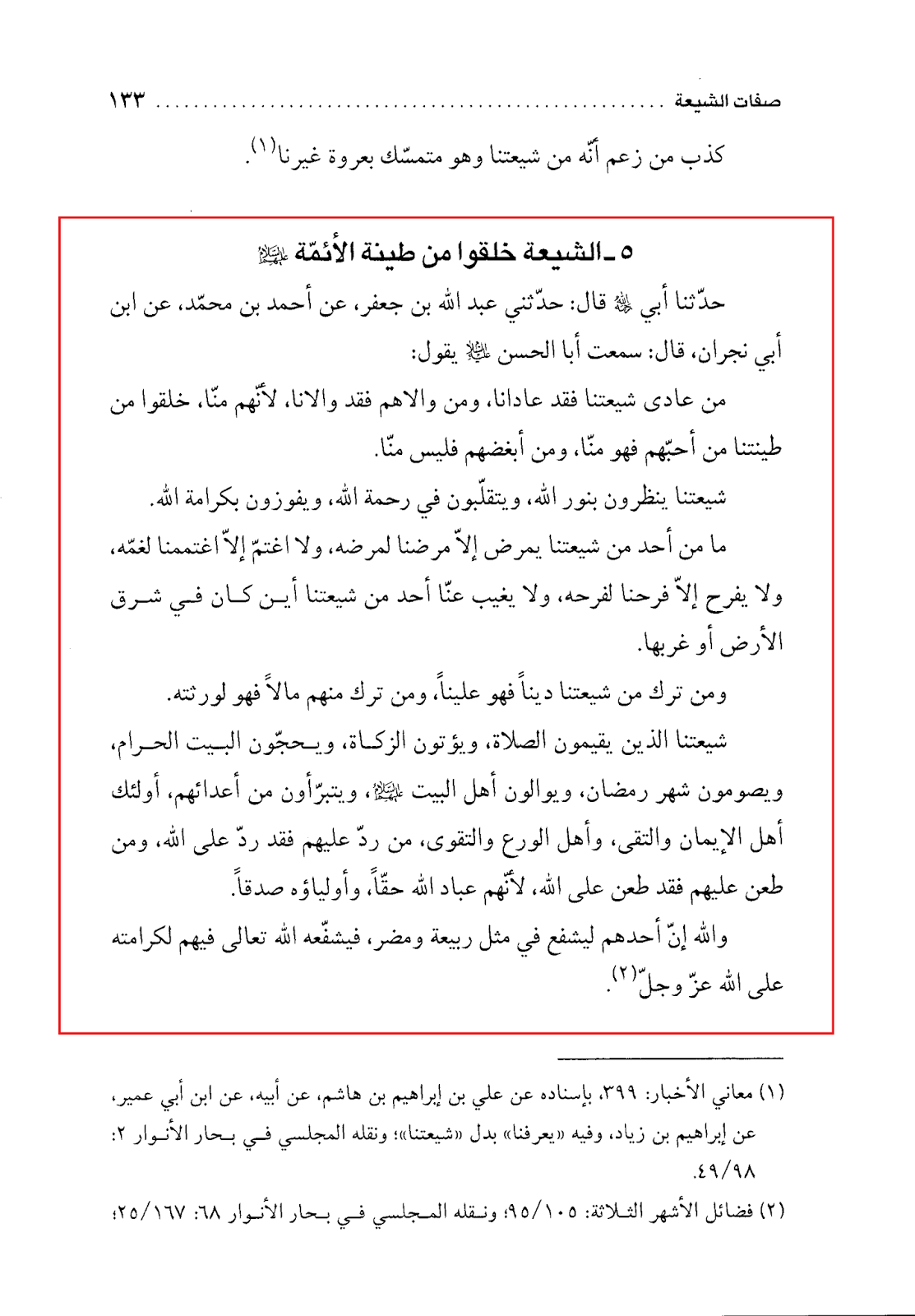
My father (Allah may have mercy upon him) narrated to us, from Abdullah bin Ja'far, from Ahmed Ibn Muhammad, from Ibn Abi Nejran that he heard Abu al-Hassan (as) saying: He who antagonizes our Shia is antagonizing us and whoever follows them is following us, because they are part of us. They were created from the same clay from which we were created. He who loves them is from us, and whoever hates them is not from us. Our Shia see through the light of Allah, move about in the mercy of Allah, and will win the dignity of Allah. We feel the same pains that any of our Shia feels during ailment, we become grieved whenever any of our Shia becomes grieved, and we feel happy whenever any of our Shia feels happy. No one of our Shia can be out of our auspices, whether he was in the east or the west of the earth. The debt that is left by any of our Shia is in our responsibility while the estate is his heirs’. Our Shia are those who offer the prayers, defray the zakat, perform the hajj to the Holy House of Allah, fast during the month of Ramadan, declare their loyalty to the Prophet’s household, and declare their disavowal of the enemies of the Prophet’s household. Those are the people of faith, God-fearing, piety, and devoutness. He whoever rejects them is rejecting Allah, because they are the true servants and the genuine disciples of Allah. By Allah I swear, each individual of them will be granted (on the Day of Resurrection) the right to intercede for people as many as the individuals of the tribes of Rabeea and Madhar, out of Allah’s honor to them.
أبى رحمه الله قال حدثني عبد الله بن جعفر عن أحمد بن محمد عن ابن أبي نجران، قال سمعت أبا الحسن (ع) يقول: من عادى شيعتنا فقد عادانا ومن والاهم فقد والانا لأنهم منا خلقوا من طينتنا من أحبهم فهو منا ومن أبغضهم فليس منا، شيعتنا ينظرون بنور الله ويتقلبون في رحمه الله ويفوزون بكرامة الله ما من أحد شيعتنا يمرض إلا مرضنا لمرضه ولا اغتم إلا اغتممنا لغمه، ولا يفرح إلا فرحنا لفرحه ولا يغيب عنا أحد من شيعتنا أين كان في شرق الأرض أو غربها ومن ترك من شيعتنا دينا فهو علينا، ومن ترك منهم مالا فهو لورثته، شيعتنا الذين يقيمون الصلاة ويؤتون الزكاة ويحجون البيت الحرام، ويصومون شهر رمضان ويوالون أهل البيت ويتبرؤون من أعدائهم، (من أعدائنا - خ ل) أولئك أهل الايمان والتقى، وأهل الورع والتقوى، ومن رد عليهم فقد رد على الله، ومن طعن عليهم فقد طعن على لأنهم عباد الله حقا وأولياؤه صدقا، والله ان أحدهم ليشفع في مثل ربيعة ومضر فيشفعه الله تعالى فيهم لكرامته الله عز وجل
-  Musanifat al-Sheikh (al-Itiqadat, Sifat al-Shia, Fadhail al-Shia, Musadiqat al-Ikhwan, al-Mawaith, Fadhail al-Ashar al-Thalitah) of Sheikh al-Saduq Page 133.


Also narrated by Allamah al-Majlissi (rah):
- Bihar al-Anwar, Vol.65, Page 119, Hadith Number 25


The scholar al-Muhadith al-Allamah Sheikh Muhammad Mahdi al-Haeri (d. 1398H) say on this Hadith:

"And in al-Bihar from the book Sifat al-Shi'a of al-Saduq (rah) with an Authentic (i.e Sahih) chain from Abi al-Hassan al-Redha (as) who has said: He who antagonizes our Shia is antagonizing us" [...]
(وفي البحار) عن كتاب (صفات الشيعة) للصدوق رحمه الله بسند صحيح عن أبي الحسن الرضا (ع) أنه قال: من عادى شيعتنا فقد عادانا ومن
- Shajarat Taubah, Page 5


Saturday, August 23, 2014

The Non Religious Debauched Shiite is better than the Religious Nasibi

The Non Religious Debauched (Fasiq) Shiite is better than the Religious Nasibi according to Aimah (as)

From al-Hassan Ibn Muhammad al-Tusi in (al-Majalis) [...] From Ya'qub Ibn Maytham al-Tamar servant of Ali Ibn al-Hussein (as) who said: I entered (in the house) of Abi Ja'far (as) so I said to him: I found in the book of my father that Ali (as) said to my father "O Maytham love the lover of the Family of Muhammad (saw) even if he was a Debauched (Fasiq) and Fornicator (Zani) and hate the hater of the Family of Muhammad (saw) even if he fast (alot) and act (alot, worship etc) I have heard the Messenger of Allah (saw) and he was saying: Indeed, they who have believed and done righteous deeds - those are the best of creatures. [98:7] Then (he) turned to me and said : They are by Allah your Shiites and your promise, and their promise is paradise tomorow, (their faces) full of lights  and happiness is in their eyes and crowns over their head. So Abu Ja'far (as) said: Like this is in the book of Ali (as).
9 - الحسن بن محمد الطوسي في (مجالسه) عن أبيه، عن القاسم بن سهل بن الوكيل (1)، عن ظفر بن حمدون، عن إبراهيم بن إسحاق الأحمري، عن عبد الله بن حماد الأنصاري، عن عمرو بن شمر، عن يعقوب بن ميثم التمار مولى علي بن الحسين (عليه السلام) قال: دخلت على أبي جعفر (عليه السلام) فقلت له: إني وجدت في كتب أبي أن عليا
(عليه السلام) قال: لأبي: يا ميثم احبب حبيب آل محمد وإن كان فاسقا زانيا، وابغض مبغض آل محمد وإن كان صواما قواما، فاني سمعت رسول الله (صلى الله عليه وآله) وهو يقول: ﴿إن الذين آمنوا وعملوا الصالحات أولئك هم خير البرية﴾ (2) ثم التفت إلي وقال: هم والله أنت وشيعتك، وميعادك وميعادهم الحوض غدا، غرا محجلين متوجين، فقال: أبو جعفر (عليه السلام): هكذا هو عندنا في كتاب علي (عليه السلام).
- Wasail al-Shia, Vol.16, Page 182-183, Hadith Number 19


al-Hassan Ibn Muhammad al-Dilami in (al-Irshad) from al-Baqir (as) who said: Love the lover of the Family of Muhammad (saw) even if he was a Debauched (Fasiq) and Fornicator (Zani) and hate the hater of the Family of Muhammad (saw) even if he fast (alot) and act (alot, worship etc).
الحسن بن محمد الديلمي في (الارشاد) عن الباقر (عليه السلام) قال: احبب حبيب آل محمد (صلى الله عليه وآله) وإن كان فاسقا زانيا، وابغض مبغض آل محمد (صلى الله عليه وآله) وإن كان صواما قواما.
- Wasail al-Shia, Vol.16, Page 169, Hadith Number 12


Abu Talib in narration of Aimah (as)

Muhammad Ibn Yahya has narrated from Sa'd Ibn Abd Allah from Ibrahim Ibn Muhammad al-Thaqafi from Ali Ibn Mu‘alla from his brother, Muhammad from Durust Ibn Abu Mansur from Ali Ibn Abu Hamza from Abu Basir from Abu AbdAllah (as) who has said the following: "When the Holy Prophet, was born he remained for days without milk. Abu Talib himself breast-fed him and Allah sent milk through his nipples. It continued for several days until Abu Talib found Halima al-Sa'diya and the child was given to her."

27 - محمد بن يحيى، عن سعد بن عبد الله، عن إبراهيم بن محمد الثقفي، عن علي بن المعلى، عن أخيه محمد، عن درست بن أبي منصور، عن علي بن أبي حمزة (1) عن أبي بصير، عن أبي عبد الله عليه السلام قال: لما ولد النبي صلى الله عليه وآله مكث أياما ليس له لبن، فألقاه أبو طالب على ثدي نفسه، فأنزل الله فيه لبنا فرضع منه أياما حتى وقع أبو طالب على حليمة السعدية فدفعه إليها.

- Usul al-Kafi, Vol.1, Page 448, Hadith Number 27


Ali Ibn Ibrahim has narrated from his father from Ibn Abu Umayr from Hisham Ibn Salim from Abu Abdallah who has said the following: "Abu AbdAllah (as), has said, 'The case of Abu Talib is like the case of the people of the cave who hid their belief and expressed polytheism. Allah gave them twice as much reward.'"

28 - علي بن إبراهيم، عن أبيه، عن ابن أبي عمير، عن هشام بن سالم، عن أبي عبد الله عليه السلام قال: إن مثل أبي طالب مثل أصحاب الكهف أسروا الايمان وأظهروا الشرك فآتاهم الله أجرهم مرتين.

- Usul al-Kafi, Vol.1, Page 448, Hadith Number 28


al-Husayn Ibn Muhammad and Muhammad Ibn Yahya have narrated from Ahmad Ibn Ishaq from Bakr Ibn Muhammad al-Azdi from Ishaq Ibn Ja‘far from his father, who has said the following: "They think that Abu Talib was an unbeliever. They lied. How could he be an unbeliever when he said such words as follows: 'Do they not know that we found Muhammad as a prophet like Musa (Moses) whose name is written in the ancient books? How can Abu Talib be called an unbeliever when he has said in the following lines?" 'They certainly know that our child is not accused of speaking, - To us lies and the false words do not receive any attention. - The (beautiful) white face (of the Holy Prophet), - That prays thus, the clouds send rain, - Is the helper of the orphans and the protector of the widows.'"

29 - الحسين بن محمد ومحمد بن يحيى، عن أحمد بن إسحاق، عن بكر بن محمد الأزدي، عن إسحاق بن جعفر، عن أبيه عليه السلام قال: قيل له: إنهم يزعمون أن أبا طالب كان كافرا؟ فقال: كذبوا كيف يكون كافرا وهو يقول:
ألم تعلموا أنا وجدنا محمدا * نبيا كموسى خط في أول الكتب وفي حديث آخر كيف يكون أبو طالب كافرا وهو يقول:
لقد علموا أن ابننا لا مكذب * لدينا ولا يعبأ بقيل الا باطل (1) وأبيض يستسقى الغمام بوجهه * ثمال اليتامى عصمة للأرامل

- Usul al-Kafi, Vol.1, Page 448-449, Hadith Number 29


Ali Ibn Ibrahim has narrated from his father from Ibn Abu ‘Umayr from Hisham Ibn al-Hakam from Abu AbdAllah, who has said the following: "Once when the Holy Prophet, was in the sacred Mosque wearing new clothes, the pagans threw the contents of the stomach of camel on him and his new clothes were ruined. Allah knows how hard it was for him. He (the Holy Prophet) went to Abu Talib and asked, ‘What is my honor worth to you?’ He asked, ‘What is the matter, O son of my brother?’ The Holy Prophet, informed him of the incident. Abu Talib, while picking up a sword, called and asked Hamza to take up arms. He then asked Hamza to pick up the stomach of the camel and they came to the people along with the Holy Prophet. They found people of Quraysh around the Ka‘ba. When they saw him (Abu Talib) they read trouble from his face. Abu Talib asked Hamza to spread the contents of the stomach of the camel against everyone’s mustache and Hamza did so to the last person. Abu Talib then turned to the Holy Prophet and said, ‘Son of my brother, this is how much we value your honor (ready to face such great risk for it)."

30 - علي بن إبراهيم، عن أبيه، عن ابن أبي عمير، عن هشام بن الحكم، عن أبي عبد الله عليه السلام قال: بينا النبي صلى الله عليه وآله في المسجد الحرام وعليه ثياب له جدد فألقى المشركون عليه سلا ناقة فملؤوا ثيابه بها، فدخله من ذلك ما شاء الله فذهب إلى أبي طالب فقال له: يا عم كيف ترى حسبي فيكم؟ فقال له: وما ذا يا ابن أخي؟ فأخبره الخبر، فدعا أبو طالب حمزة وأخذ السيف وقال لحمزة: خذ السلا ثم توجه إلى القوم والنبي معه فأتى قريشا وهم حول الكعبة، فلما رأوه عرفوا الشر في وجهه، ثم قال لحمزة: أمر السلا على سبالهم (2) ففعل ذلك حتى أتى على آخرهم، ثم التفت أبو طالب إلى النبي صلى الله عليه وآله فقال: يا ابن أخي هذا حسبك فينا.

- Usul al-Kafi, Vol.1, Page 449, Hadith Number 30


Ali has narrated from his father from Ibn Abu Nasr from Ibrahim Ibn Muhammad
al-Ash‘ari from ‘Ubayd Ibn Zurara from Abu Abdallah, who has said the following: "When Abu Talib (as) passed away, Jibril came to the Messenger of Allah and said, ‘O Muhammad, migrate from Makka. There is no one to help protect you.’ Quraysh revolted against the Holy Prophet, and he came out of Makka running away until he reached one of the mountains of Makka, called al-Hajun. He went there."

1 3 - علي، عن أبيه، عن ابن أبي نصر، عن إبراهيم بن محمد الأشعري، عن عبيد بن زرارة، عن أبي عبد الله عليه السلام قال: لما توفى أبو طالب نزل جبرئيل على رسول الله صلى الله عليه وآله فقال: يا محمد اخرج من مكة، فليس لك فيها ناصر، وثارت قريش بالنبي صلى الله عليه وآله، فخرج هاربا حتى جاء إلى جبل بمكة يقال له الحجون فصار إليه.

- Usul al-Kafi, Vol.1, Page 449, Hadith Number 31


Ali Ibn Muhammad Ibn Abdallah and Muhammad Ibn Yahya have narrated
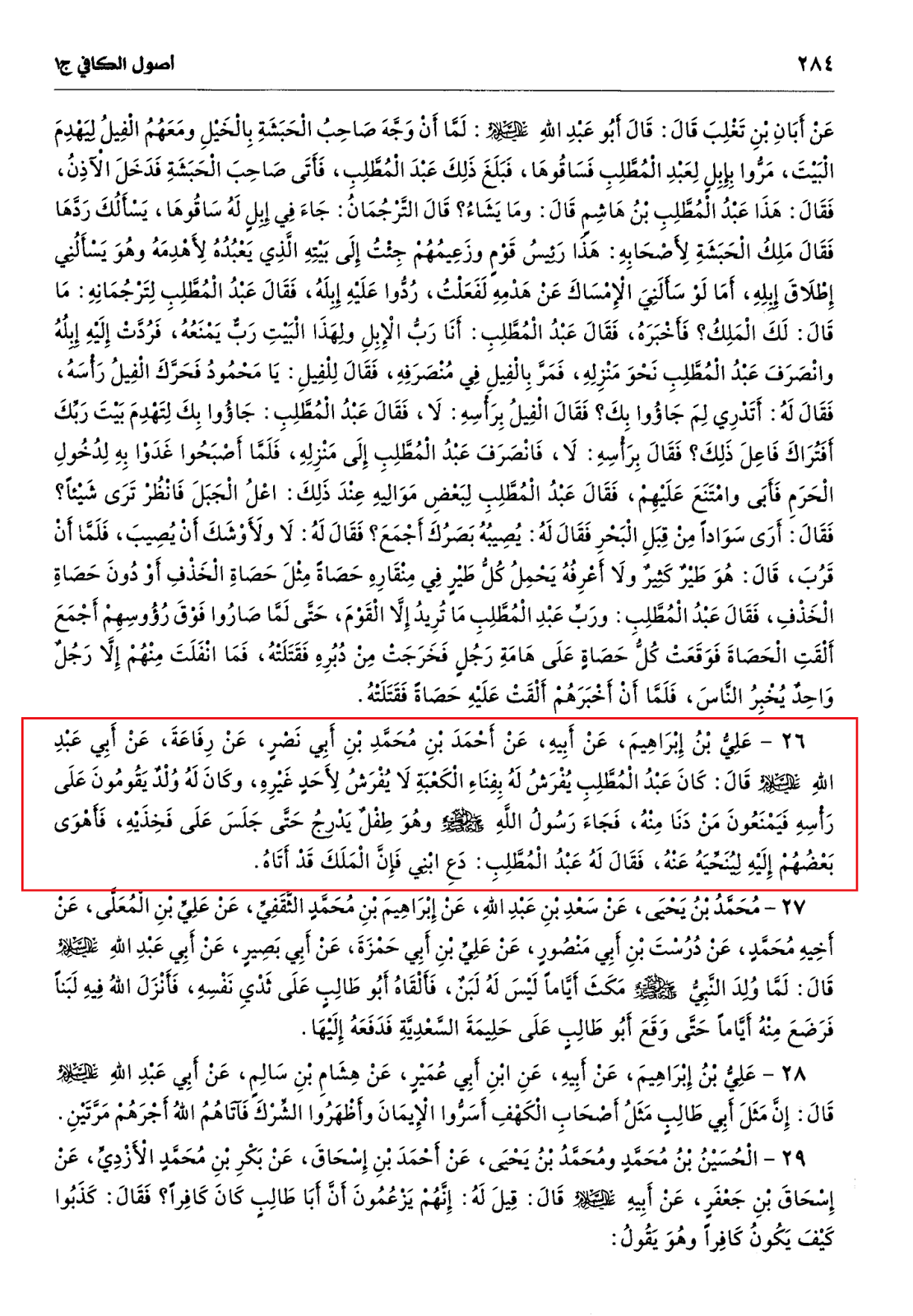
from Muhammad Ibn ‘Abd Allah [...] from Abu Abdallah who has said the following: "Abu Talib acknowledged Islam through the expression of al-Jummal, a universal language. (Al-Jummal is a system wherein each letter of the alphabet is given a certain numerical value and instead of a letter its numeric value  s used for secrecy or other reasons). The Imam said, 'He used a universal language.'"

32 - علي بن محمد بن عبد الله، ومحمد بن يحيى، عن محمد بن عبد الله رفعه، عن أبي عبد الله عليه السلام، قال: إن أبا طالب أسلم بحساب الجمل؟ قال: بكل لسان.
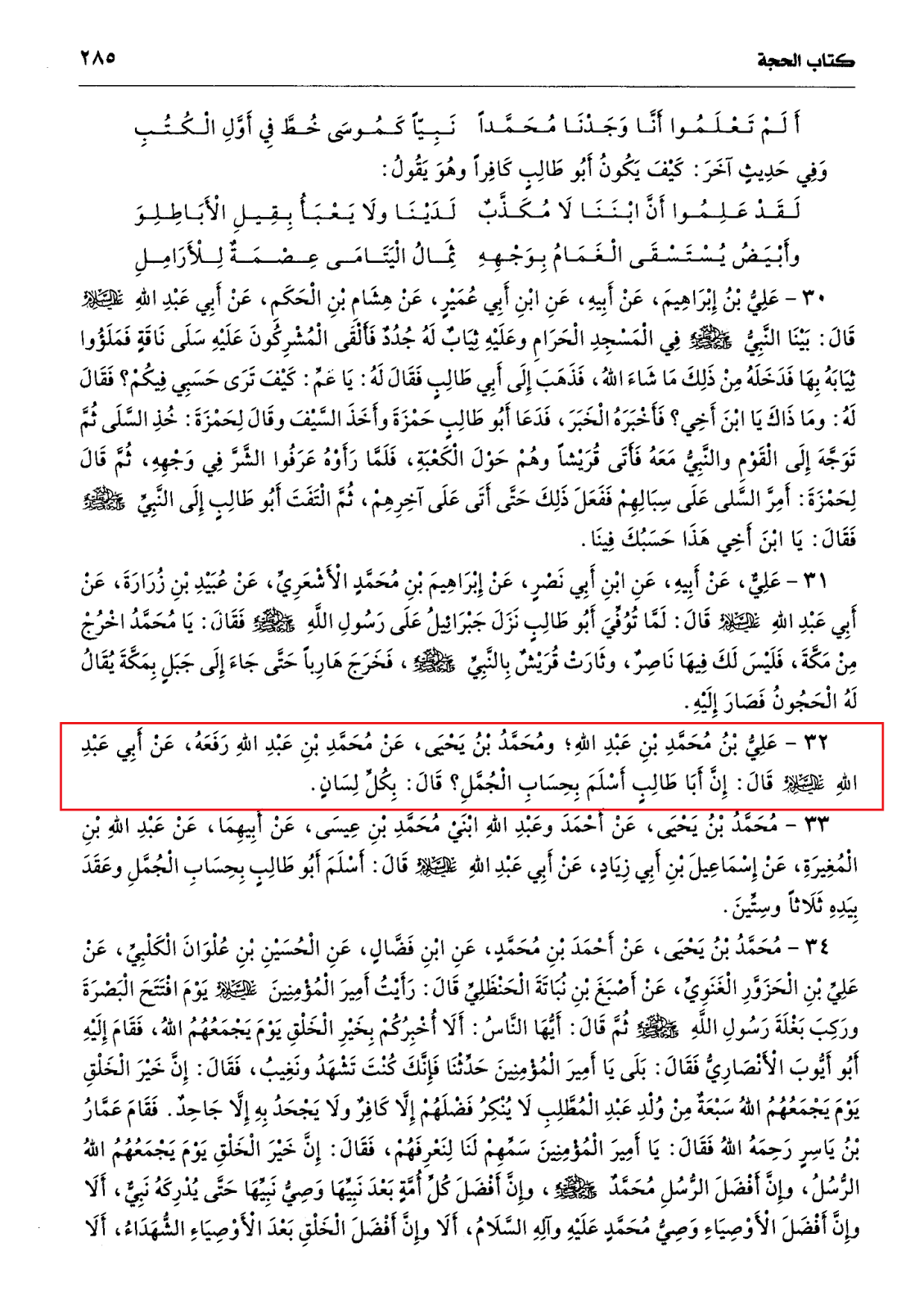
- Usul al-Kafi, Vol.1, Page 449, Hadith Number 32


Muhammad Ibn Yahya has narrated from Ahmad and Abdallah sons of Muhammad Ibn Isa from their father from Abdallah Ibn al-Mughira from Isma‘il Ibn Abu Ziyad from Abu Abdallah (as) who has said the following:  "Abu Talib acknowledged Islam through the expression of al-Jummal. He formed number sixty-three with his hands."
33 - محمد بن يحيى، عن أحمد وعبد الله ابني محمد بن عيسى، عن أبيهما، عن عبد الله بن المغيرة، عن إسماعيل بن أبي زياد، عن أبي عبد الله عليه السلام قال: أسلم أبو طالب بحساب الجمل وعقد بيده ثلاثا وستين.

al-Hussein Ibn Muhammad has narrated from Muhammad Ibn Yahya al-Farisiy from Abu Hanifa Muhammad Ibn Yahya from al-Walid Ibn Aban from Muhammad Ibn Abdallah Ibn Muskan from his father who has said the following: "Abu Abdallah (as) has said, ‘Once Fatimah Bint Assad came to Abu Talib with the glad news of the birth of the Holy Prophet. Abu Talib said, ‘Wait for a sabt, then I will give you similar glad news, except prophet-hood (the new born will not be a prophet).’ “The Imam has said, ‘A sabt is thirty years. Amir al-Mu’minin Ali, was born thirty years after the birth of the Messenger of Allah."

1 - الحسين بن محمد، عن محمد بن يحيى الفارسي، عن أبي حنيفة محمد بن يحيى، عن الوليد بن أبان، عن محمد بن عبد الله بن مسكان، عن أبيه قال: قال أبو عبد الله عليه السلام: إن فاطمة بنت أسد جاءت إلى أبي طالب لتبشره بمولد النبي صلى الله عليه وآله فقال أبو طالب: اصبري سبتا (2) أبشرك بمثله إلا النبوة، وقال: السبت ثلاثون سنة وكان بين رسول الله صلى الله عليه وآله وأمير المؤمنين عليه السلام ثلاثون سنة.